No one is above translation quality control – not even me.
A degradation or omission of quality control is the reason that people, companies, and even civilizations fail – a bold statement, I know, and yet I believe it to be true.
In engineering, medical, and other technical pursuits, the disaster is easier to spot: bridges collapse, airplanes nosedive, iatrogenic infections happen, and so on.
Our own professions (translation and interpreting) are humanitarian, of course, but they border on technological in the sense that there is a certain technology in translation. By technology, I don’t mean gimmicks and devices, but rather a set of methods, techniques, and principles applied in a certain field.
Translation quality control gone awry can range from “cute” to disastrous.
Cute would be along the lines of a famous English>Russian translation joke where a phrase like “A bare conductor runs under the carriage” was literally translated into Russian as “A naked ticket examiner (conductor) is running under the train car.”
Another semi-humorous example of a mistranslation resulted in the Biblical prophet Moses having horns. Look at Michelangelo’s statue and other representations, and you will see what I mean. The explanation? The word used in Hebrew was “qāran,” meaning rays of light. However, this word also derives from “qeren,” horn. Hence the confusion between “face shone” and “grew horns.” Now, I am no Hebrew linguist, but I’ve heard it explained (by a clever native who knows his business) why the “horns” version is even quite impossible grammatically, not to mention contextually. Yeah, St. Jerome, why would a prophet who just talked to God grow horns?

All right, so in that case, perhaps it would have been rather difficult to clarify with the “author.” Just imagine: “Excuse me, God, I’m translating the Bible here into Vulgar Latin, and I’m not quite sure if this confusing word here means that Moses’s face shone after he talked to you or if he grew horns after he talked to you.”
But simply phrasing the question like that sort of makes the “horned answer” ridiculous, does it not?
St. Jerome might have been a good guy, but he definitely didn’t apprentice on my team, or else this would never have happened.
If you want your book translated without it growing horns, send me a message.
Though I said this incident was funny, it really is not, considering that it provoked waves of antisemitism – if the greatest Jewish prophet had horns, then… make your own conclusions.
You can look up your own humorous and horrid examples of mistranslation, but I can tell you that legs have been amputated, patients killed, wars almost started (and maybe started) because of mistranslation. In fact, there is a possibility that the bombs were dropped on Hiroshima and Nagasaki because of a mistranslation. In short, the same word in Japanese – “mokusatsu” (which derives from the root “silence”) can mean “withhold comment” or “not be worthy of comment.” The prime minister replied “no comment” – as politicians often do – which was translated as “not worthy of comment.”
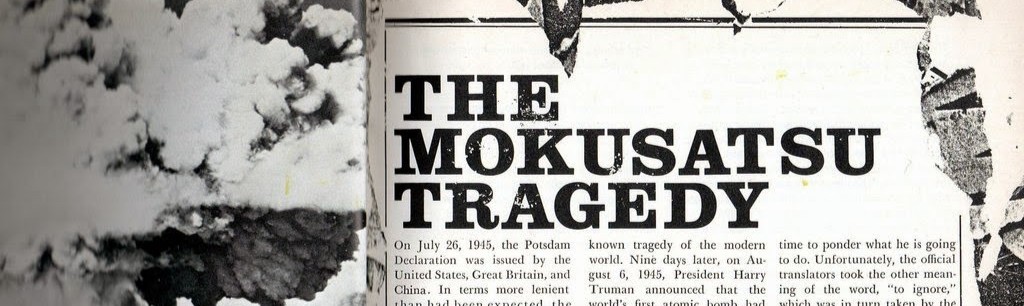
I can’t vouch for the political aspect, but linguistically, that story makes total sense – alas, I see something similar almost daily.
But what is mistranslation, really? After all, giving a disease a fancy name doesn’t cure it – what does is understanding the origin of the malady and how to fix it.
Well, mistranslation really “translates” as poor quality control, or none at all. Strike that – it might not even be “poor” but simply insufficient quality control. The quality control could be 99% good, but if the vital mistake was missed in the 1%, voila…
So, what is translation quality control, how does it work, to whom does it apply, and so on?
First, let me give you some fun examples of translation quality control from my own practice, and then we will take a look at the actual steps in both translation and interpreting.
Fun Examples of Translation Quality Control
Funny or not, but once I sight-translated about 90% of a large novel back to the author so that he could track with the English text. For those of you who’re new to this term, sight translation means reading a written text while translating (technically, interpreting) it orally on the fly into the target language. Anyway, I read nearly his whole sci-fi book back to him using this style of translation and making any necessary changes. Don’t try this at home…
Once, I had a team of translators do this for me on a business fable project. We translated into over ten languages, and I tortured these poor people, listening to them translate into English from French, Arabic, German, Japanese, and so on.
A United Nations linguist I had on the project said, “Vladimir, you have some crazy quality control standards.” I took it as a compliment.
This need not happen on every project, but there was a method to my madness…
During a large business book translation, I was checking the Spanish team using a so-called “random check”: I didn’t review the whole text, but rather scrupulously perused 7-10 paragraphs of each chapter. If a minor mistake was found, I’d ask them to fix it. If there was a major mistake, I’d ask both the translator and editor to review the whole chapter. Quite surprisingly, the mistakes grew fewer and fewer as we progressed. At the end, I asked the Spanish translator: “Was my work helpful or vexatious?” His answer: “Both!” But we’re friends, so I laughed.
In one felony court case, I interpreted the word “repent” as “make amends.” After the trial was over for the day, I repented this translation (because they are slightly different) and decided to make amends. So, I called a colleague, consulted with him, and the next day decided to fix this term for the record. It was rather funny how the defense attorney and prosecutor both grew rather tense at my proclamation that “The interpreter would like to make a correction for the record.” Then they heaved a sigh of relief once I spoke – because it really made no difference in the case – it was more for my own professional pride.
One time, a Ukrainian lawyer fluent in English very gleefully corrected me that the witness did not say McDonald’s but just “fast food.” Indeed, he was right – the witness specified McDonald’s the previous time, but the second time he simply generalized. It was not a real meaning shift because he did mention that they ate at McDonald’s, but in court, it’s best not to assume anything, ever. Curiously, how context plays such a vital role – in other settings specifying a fact would have been a welcome detail, but in court it was a minor mistake.
Another time, I was interpreting a deposition, and a lady was speaking Russian but used a Ukrainian word I didn’t know. I assumed it to be “high heels,” but it actually meant something like thick soles. Unlike the fast-food point, this was rather crucial because she was suing the establishment for falling on an icy path, so had she been in high heels, she would have had no grounds for the lawsuit. Good thing I clarified.
In a current editing project, a very good proofreader (or someone else) changed the term “night game” to “night games,” creating an iatrogenic mistake – one introduced internally. “Night game” is a dating term meaning meeting women at night venues. She didn’t know the term, so she assumed it to be “games” rather than game.
This is why clarification of terms and ambiguities is vital: when we don’t understand something, our mind tends to “fill in the blanks” or assume things in a way that makes sense to us. But this can be quite wrong.
Quality control even applies to authors! For example, in one business book translation, the author divided a product’s life cycle into :
1) Creation of value,
2) Optimization of value, and
3) Conquest of Value
Number one makes sense – creating a valuable product. Number two had to be defined, because most people would understand “optimize” as make (the product) better, but he meant something different – finding the optimum route to deliver the product to the customer. I insisted on defining this.
The last one nearly caused WWIII between us because his idea behind “Conquest of Value” was the entrepreneur conquering their market share, as well as money – in other words, here “value” meant something valuable to the entrepreneur. However, this would have caused total confusion because Value 1 and Value 2 were value from the standpoint of the client, while Value 3 was now something valuable to the entrepreneur. Imagine an American and an Australian arguing whether it’s summer or winter right now – something quite similar.
Without a clarification, these three steps made it sound like the entrepreneur was somehow conquering their own product – rather than conquering the market with the product.
In this case, I questioned him for weeks until I finally got it, and then I very politely demanded (yes, quite literally) that we define it to save the readers from confusion.
Well, I could cite many, many more, but these are some examples of quality control.
But let’s move on!
Quality Control in Translation

As I’ve stated, translation quality control applies to anyone, no exceptions. Sometimes, the person can do all the necessary steps on their own (hard but doable), but all steps must be done.
In translation, I don’t recommend working alone, and I don’t do it myself. As we say in Russian, “A lone warrior is no warrior at all.” Hemingway phrased it a tad differently: “No man alone has no bloody f***ing chance.”
To understand how quality control works and why these are the steps, it’s best to start with the product (result) of translation, and then backtrack.
The Product of Translation:
A text in the new (target) language that preserves the concepts and details, the tone and intention, as well as the style and register of the original, while expressing this all in a way that sounds completely native and natural in the target language. (The reader should feel like it’s a book written in their language, yet nothing should be lost, added, or changed – unless of course, you’ve coordinated changes with the author, but that’s another story that should be told another time).
From this definition, it’s easy to see how and where things could go wrong.
So-called meaning shifts (changes in meaning) are quite common.
An awkward, “translational” style is another common malady – meaning, the translator doesn’t have native command of the target language or simply adheres to a rather literalistic translation style.
Even if the translator is a native, alterations in style can still happen. Also, stylistic, grammatical, lexical, spelling, and punctuation mistakes do happen with natives as well – none of us is perfect. After all, some people are more erudite and literate than others. And even highly literate people make mistakes.
That was a very cursory description of translation mistake categories.
From these categories, we can derive the steps and roles necessary for thorough quality control in translation…
The Process of Translation Quality Control
Any translation process must have these steps:
- Clarification of terms and ambiguities
- Translation
- Review
- Editing
- Proofreading
This is a simplified version because we can break each step into sub-steps. Also, translation itself is not necessarily part of quality control, though a translator organically works some quality control into the process anyway.
For example, medications go through a thorough testing process after they are created (this is quality control), but I am sure that some quality control is also done in the development and creation stages.
I included clarification of terms and ambiguities here as a separate step because I consider it absolutely vital, critical, crucial, indispensable, mandatory, and so on. It’s part of translation itself, and it’s part of quality control. I placed it first, but this is not chronological – it can happen anywhere in the process (should not happen during proofreading, though).
By the way, most people think of clarifying terms (if they think of it at all) as checking the words and phrases of the source text. However, I also clarify terms in the target language, as needed. For example, if I’m going to use an idiom or a word and I’m not 100% sure of its meaning, I just do a quick check to make sure I’m using the word properly. It takes anywhere from 5 seconds to 5 minutes, but it’s worth it. Incorrect usage of words is silly, embarrassing, and causes confusion (unless it’s clearly understood that it’s intentional). Proper usage of words shows intelligence, erudition, and care.
Now, back to translation quality control. On our team, we define the terms as follows:
- Review means comparing the original (source language) to the result (target language), mainly for meaning inconsistencies: remember, Moses and his “horns,” the high heels versus the soles, etc.?
- Editing means polishing the style of the work so that it’s grammatically correct, not translational, etc.
- Proofreading is checking very technical points like spelling and punctuation.
I prefaced this with “on our team” because many people and companies give these terms very different meanings. So, my suggestion to translators, companies, and clients alike is to clarify but well what is meant by each term before embarking on the journey. (It could be said that the main reason for conflicts is unclear agreements.) In fact, when clarifying these expectations, you’re running quality control on negotiations!
I would argue that each of the above steps must, must, must be done – even if the translator is working solo. They still have to clarify terms, translate, review, edit, and proofread – at least once, but best several times.
Of course, it’s easier done with a team, especially for bigger projects.
For a free consultation on your project or on your company’s translation process, you know what to do!
Now, let’s move on to a sister subject (well, maybe cousin) – Interpreting!
Quality Control in Interpreting

Clearly, in interpreting, we don’t have the same luxury of time for all these wonderful stages of quality control.
However, all the steps still apply somewhat, but in a much more superficial, off-the-cuff way. Well, all except proofreading, I’d say – because no one really cares about spelling and punctuation in interpreting.
Of course, new aspects get introduced in interpreting that do not matter so much in translation – for example, delivery, pronunciation, overall demeanor, and so on. And yes, these also fall under the category of “quality control” if they detract from the interpreter’s performance.
For example, I was once told “how much better I was” simply because yesterday’s interpreter was monotone (maybe he was a better linguist, but his humdrum delivery put the audience to sleep).
Another case in point: I was training a totally green interpreter, but we were not progressing, and I couldn’t quite put my finger on the reason. At last, it dawned on me that this had little to do with linguistic deftness – her overall communication skills suffered: nervous and uncertain presence, which, of course, affected her delivery, and so on.
For two days we practiced nothing but communication skills, and when we returned to interpreting, she was “reborn,” and we progressed fast. Soon after, she spent three weeks interpreting seminars abroad and got excellent reviews.
This is when I clearly understood that a truly excellent interpreter must be an excellent communicator – they go hand in glove.
As far as linguistic factors, pronunciation and overall knowledge of the language can factor in. An accent is not a deal breaker in interpreting, but if it is so heavy that it’s hard to understand or even just “jars people the wrong way,” then, hm…
Grammar need not be picture-perfect in interpreting (just like in oral communication itself), but if the grammar suffers substantially, it will cause problems. I remember one speaker (not a native of English) who said “you must not” while he actually meant “you don’t need to” – totally different meaning. I surmised his intent from the context and when I clarified, I was right.
So, you see, different factors play a role in interpreting, but the translation process nevertheless applies, loosely.
You’re still clarifying terms in many cases – during the process, before the process, or during breaks.
Meaning is still being monitored – hopefully! – by you, your colleague, or those “wicked” speakers of your language present at the meeting. Regardless of who else is present, the interpreter should definitely be performing quality control on their own!!!
Important caveat, though: as the interpreter, you should NOT be continuously introverted, doubting what you just said or are about to say. That is extremely counter-productive – in truth, that’s self-sabotage, not quality control. But you should be aware of what you said and the terms you used, and should something seem awry, it should be fixed.
I honestly cannot tell you where that mental boundary lies between healthy self-monitoring and destructive self-sabotage. I would say that if you are in good shape mentally and spiritually, you won’t self-sabotage.
If you would like to talk to me about factors (even personal and non-linguistic) that you believe are impeding you in your career, I may be able to help.
However, a less esoteric way would be asking for colleagues (or even clients!) about terminology. I do this often during breaks, and people are quite happy to help. They don’t think less of you – they think more because it takes a true professional to slide aside the ego and focus on the best possible result.

Remember my example about “repenting” versus “making amends”? That was an example of quality control on yourself in regard to meaning and terminology.
Naturally, court interpreters and conference interpreters monitor one another – hopefully in a helpful way. It’s between partners to work out exactly how this process should go, but ideally, in a tactful and productive manner.
I remember the young Vladimir working with a more experienced interpreter. At one point, I blurted out gleefully and vociferously: “Your Honor, I object to the translation!!” My colleague was a little embarrassed. Yes, there was a mistake – however, I suppose it was not such a major blunder and could have waited till break. I just didn’t want to forget.
In a more recent case, I said something like: “Your Honor, may I confer with my colleague regarding a term used?” And the colleague agreed to change the term. Had he not, I would have stated my objection for the record.
Don’t get me wrong: courtesy is important, but precision is vital. So, no, I am not afraid to “offend” someone for the sake of true quality control. I always strive for the gentlest way possible, but if that doesn’t work… (“Offend” is in quotes because no true professional should ever be offended at a tactfully phrased correct correction.)
It is always best to let the person correct themselves, without drawing the attention of others to the mistake – that’s the most just and gentle way. So, if the mistake is not crucial in the setting and context, I’d wait. If it is crucial (like in court on the record), then there is little choice.
In fact, whether or not a person will accept fair corrections is a major test of whether they’ll be able to work with me. If someone’s hair bristles at a just correction and they’re ready to duel and go to war, it’s an instant deal breaker.
But then again, I don’t demand anything from anyone that I don’t do myself. In other words, I quality-control myself and allow others to do it justly and tactfully.
To explain, I keep saying things like “just” or “correct” correction because when it is not, then quality control should be applied to the “quality” controller. For example, I’ve corrected back the monitors who’ve corrected me during immigration interviews. No, not out of spite or to “show them,” but for two reasons, really: first, correcting something that is right obviously makes it wrong; and, secondly, it introverts you because inherently you know you just swallowed a wrong correction. So, I try to never do it and never let it happen. And if you did correct someone unjustly (which does happen), then be bigger than your ego and bloated pride and admit that the “correction” was incorrect.
***
Quality control really applies to any linguistic pursuit: for example, editing is quality control in itself, but you can also have quality control of editing. When I’m deciding on an editor, I give them a sample text to make sure they do not enter mistakes into the text or change things they have no authority to change.
One word of caution about any type of quality control: it CAN be overdone. Think of a steak: it can definitely be undercooked, but it can easily be burned and charred as well. The golden mean is to “cook” the translation to the exact degree of doneness necessary.
For example, some editors wish to make a text as grammatically proper as the decorum at Queen’s court. But what if the author’s style is being a little casual with grammar and language intentionally? Some editors and reviewers might want to make a translation too literal, smothering it stylistically and conceptually, killing its spirit and aliveness.
Since we’re talking about editing… The hallmark of a great editor is bringing out the author’s voice and concepts without stifling and suffocating.
If you wish to talk to me about an editing project, click, please don’t be shy.
In fact, I would be remiss not to mention this: please choose your quality controllers carefully, especially if you’re a high-caliber linguist (or person). The wrong reviewer or editor can kill a translator or writer. Just imagine a mediocre English teacher editing Shakespeare, Byron, Maya Angelou, etc. That teacher would find a gazillion “mistakes,” don’t you concur?
Anyway, enough said.
Conclusion

Quality control in translation and interpreting is a vital and integral part of the process. It separates the average from the good and the good from the great.
And quality control in life is so vital that without it, any pursuit will fall on the rocks. While I did say that it can be overdone (and that is true), I prefer to be safe than sorry in this matter, despite my usual happy-go-lucky nature.
Let’s conclude with two anecdotes of quality control in life:
Normally, my mom makes a mean gazpacho. But today, it was “mean” in a different way: bitter. The bitterness came from the cucumbers. I asked: “Well, did you taste them before?” Of course, her answer was “No.” Then she added: “But usually it’s just fine.” And that’s the point: things can be just fine 999 times, but that 1000th time can be “bitter.” And if it’s just gazpacho, that’s not the end of the world. But what if it’s a medicine, an airplane, or a translation…? Then the result could be truly bitter.
She’s bound and determined to remake it tomorrow – now, that’s some wicked quality control!
Second story: I bought a birthday present today for a guy from our chess group. When the clerks packed it, they placed the book and CD together. When I was separating the two, the book cover was slightly damaged. For a moment, I was tempted to just let it go – after all, I hardly know the guy, it would not be a big deal, and my present was the best one anyway. Excuses, excuses, excuses…
Had I let it go, I would not be me, Vladimir. The very idea of apologizing for the cover made me cringe. Besides, the present revolved around aesthetics: wine, a chess book, a CD, a pretty gift pack, and this small defect detracted from the beauty.
So, I went back and asked for an exchange. It turned out that the copy I bought was the last one, so we called another Barnes & Nobles and got them to check. I drove some 10 miles there and back again and got what I needed, spending an extra 30 minutes in the process.
Would it have been disastrous to just let it be? Nope – he may never read it, he may not even have noticed. But I noticed, and that’s the point: can you live with a product of lesser quality than you know you’re capable of? This “pedantic” approach to quality control is one of the reasons why I am the professional that I am. I shall never trade quality and pride for comfort and ease…
The reward? When I was delivering my eloquent toast, goblet in hand and all eyes on me, I knew I did everything in my power to make his present amazing. Do you think my legwork affected my confidence? You betcha! (Yeah, I speak Minnesotan).
So, the quality-control process can be tedious or fun, but there is nothing like delivering a high-quality product and feeling a sense of pride for a job well done. Because that’s rare. Now that you’re done, go reward yourself with a steak – well-done or rare but not overdone. And if you’re a vegetarian or vegan, please edit this recommendation accordingly (but no need to proofread the dish).